
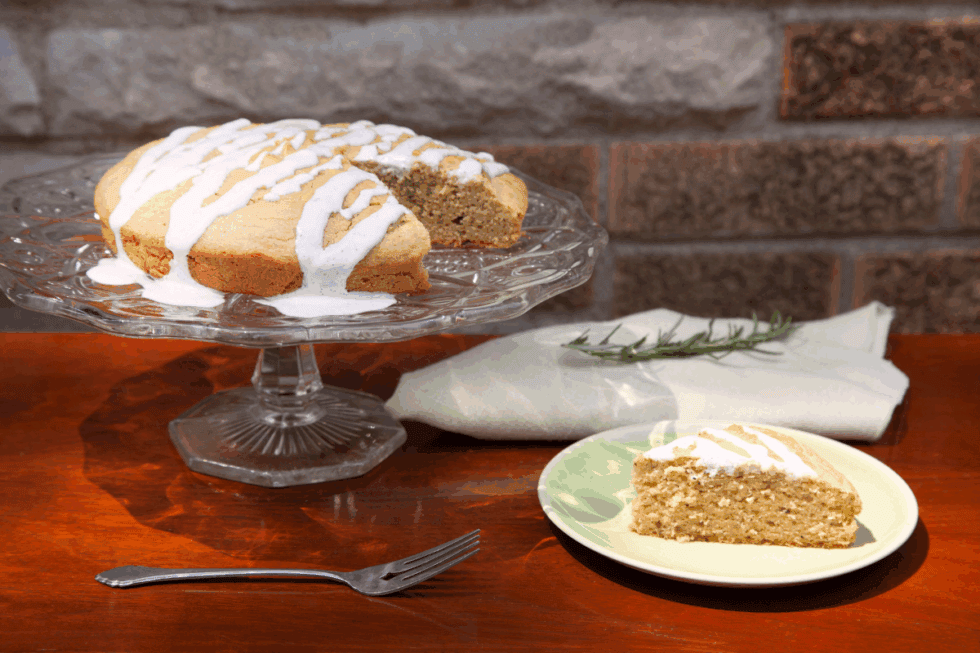
Low Histamine Cake with Olive Oil (also Low Lectin and Medium Oxalate)
Olive oil may not be the first ingredient that comes to mind when you think about making a low histamine cake.
But olive oil cake is very popular in Mediterranean countries like Spain, Greece, and Italy.
This low histamine recipe doesn’t call for potentially triggering ingredients like dairy and wheat. Instead, you’ll use good quality olive oil and histamine-friendly cassava flour.
This cake by itself is a neutral canvas. It’s somewhat akin to a plain vanilla cake.
But the apple coconut cream topping adds moisture and flavor to transform the ordinary into something special.
We’ve got more on what you can expect from this cake in our top tips section.
Be sure to read it so you know what to expect from this unique cake!
This recipe is:
- Low histamine
- Medium oxalate
- Low lectin
- Dairy free
- Gluten free
In this post, you’ll get the full recipe and you’ll learn about:
- Olive oil and Histamine Intolerance
- The benefits of olive oil
- Our favorite olive oil (and coupon code!)
- Tips for making this recipe
Low Histamine Cake: Olive Oil and Histamine Intolerance
Before you change your diet on your own, please make sure you’re working with a healthcare practitioner who can help you with this. Never limit foods unnecessarily, and always have a licensed medical provider who is supervising your case.
One of the key ingredients in this cake is olive oil.
It’s not just a replacement for cooking fats like canola oil or butter.
Olive oil is a key flavor component for this cake.
But is olive oil low histamine?
Great question.
If you’re on the low histamine diet, you definitely want to know what high histamine foods to avoid since histamine content contributes to higher histamine levels.
And sometimes food lists are confusing!
You’ll see olive oil on both high and low histamine food lists.
And at one time, it was thought that initial consumption of olive oil might increase histamine levels.
As more research is conducted, studies are showing that the compounds in olive oil may actually inhibit histamine release, in part by inhibiting mast cell degranulation.
And studies have shown that olive oil increases the production of diamine oxidase (DAO), the histamine degrading enzyme.
Many people with high histamine levels don’t naturally produce enough of the DAO enzyme, which means you may have low DAO levels.
So, supplements or foods that stimulate DAO production can be beneficial.
The Swiss Interest Group Histamine Intolerance (SIGHI) lists olive oil, particularly extra virgin olive oil, as generally well-tolerated.
And in our experience, many of our clients have done well with good quality olive oil.
Extra virgin olive oil is going to be your best option if you have Mast Cell Activation Syndrome (MCAS) or Histamine Intolerance.
It’s the highest grade of olive oil. And grade matters. Here’s why:
Grades of Olive Oil
Olive oil standards are actually a bit complex and stringent.
They are rated based on factors like processing, acidity levels, odor, flavor, and oxidation rate.
Here’s why you want to stick with extra virgin olive oil.
Extra Virgin Olive Oil (EVOO)
Extra virgin olive oil (evoo) is considered the highest quality olive oil.
It’s harvested from ripe olives and processed quickly for maximum freshness.
Additionally, extra virgin olive oil is made using a cold-pressed process.
This means the olives are crushed and oil extracted without the use of heat or chemicals.
This minimal processing results in a richer natural flavor.
And here’s how these factors may make a difference for those with Histamine Intolerance or Mast Cell Activation Syndrome (MCAS).
To start, using olives at the peak of freshness is ideal. And quick processing is another favorable condition.
That’s because older, overripe fruits and veggies have higher levels of histamine-producing bacteria present.
And the longer perishables sit, the more prone they are to decay, mold, and bacteria.
Not good if you’re trying to lower histamine and get your mast cells regulated.
Additionally, minimal processing means that most of the nutrients will be retained. Including healthy polyphenols, which act as antioxidants.
You’ll read more about the benefits of polyphenols a little later.
But for now, here’s one key benefit of polyphenols:
Polyphenols can help inhibit histamine release. Very beneficial for those with Histamine Intolerance and Mast Cell Activation Syndrome!
However, these polyphenols break down during the refining process that all other grades of olive oil go through.
That means that lesser grades of olive oil won’t offer the same benefits.
Let’s look more at how the refining process yields a product that is less ideal for those with Histamine Intolerance or MCAS.
Refined Olive Oil
Refined olive oils are typically made from olives that are deemed unsuitable for extra virgin and virgin olive oil.
They are often damaged or overripe.
These lesser quality olives must go through processes using filters, heat, and solvents to remove impurities.
In terms of bacteria and histamine, you read earlier that freshness matters when it comes to perishables.
So, using overripe and damaged olives may contribute to an increase in histamine.
Additionally, refined oils are processed at high temperatures, which can cause oxidation.
Oxidation is a natural chemical process that happens when fatty acids react with oxygen. This causes the oil to degrade.
This process causes foul smells and rancidity. Further, oxidation can lead to an increase in free radicals and thus, potentially, oxidative stress.
Both can contribute to mast cell activation and mast cell degranulation.
Related Article: Mast Cells and Mast Cell Activation Syndrome 101
And refined olive oil will be poorer in nutrient content.
It will not have the same antioxidants that the other grades have since the refining process removes natural antioxidants.
Anything that isn’t labeled extra virgin olive oil will have some percentage of refined olive oil.
You might see these sold as:
- Olive oil
- Regular olive oil
- Light olive oil
- Olive oil pomace
Be extra sure to stay away from any blend with the olive oil pomace.
This is made from the bits leftover from the refining process to get the last drops of olive oil out of the remaining crushed olives.
To do this requires chemicals that may be mast cell triggers for those who are super sensitive.
So, is olive oil right for you?
Trying Olive Oil
As with most things related to food sensitivities, everyone is different.
If you aren’t sure if you tolerate olive oil, test your tolerance with small amounts before diving into an olive oil-based recipe.
Very sensitive people may start with just a few drops.
For those who are are less sensitive overall, you can start with a little more, maybe ¼ teaspoon.
If you find that you’re tolerating olive oil, here’s how much is in our recipe to help you gauge.
Our recipe uses 1 cup of olive oil which equals about 2 Tablespoons per serving, if serving 8 people.
And remember, if you don’t tolerate olive oil now, it doesn’t mean you won’t tolerate it forever.
As many people regain their health, they are able to add more foods back into their diets in moderation.
In the meantime, you can try some of our other low histamine dessert recipes like low histamine baked peaches or easy mango low histamine ice cream.
But if you can tolerate olive oil, there are some big health benefits to it!
Health Benefits of Olive Oil
Many benefits of olive oil come from the “good fats” (unsaturated) and polyphenols (antioxidants).
The unsaturated fats found in olive oil may aid in:
- Heart health
- Brain health
- Lowering “bad” LDL cholesterol
- Raising “good” HDL cholesterol
Polyphenols have been shown to have health benefits like:
- Antioxidant properties to fight free radicals, keeping cells healthy
- Anti-inflammatory properties
- Helps keep plaque from building up in arteries
- Helps prevent blood clots
- May increase good gut bacteria
- May inhibit mast cell degranulation
All great benefits!
But remember, all olive oil isn’t created equally.
In fact, there are many frauds out there!
Related Article: Olive Oil – Avoiding the Frauds and Finding the Truth
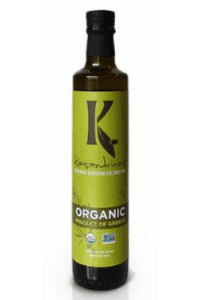
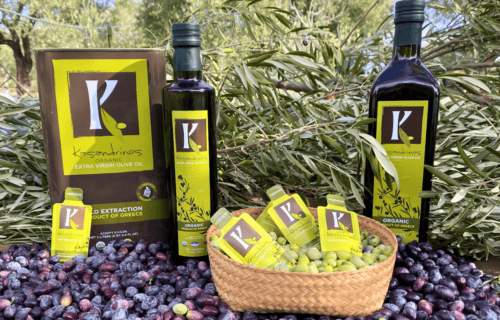
For taste and quality, our favorite extra virgin olive oil is from Kasandrinos.
Kasandrinos Olive Oil
Kasandrinos offers organic extra virgin olive oil. That means no pesticides!
Their olive oil is made using a cold-press method. And it’s pressed within 24 hours of harvesting the olives. Super fresh!
The cold press method (first cold-pressed) has the benefit of preserving nutrients that refining doesn’t.
And histamine levels will be lower because it hasn’t undergone the heat treatments of refined olive oils that we talked about earlier.
Additionally, Kasandrinos olive oil is a single source olive oil. This means that the olive oil comes from olives from a single farm or region.
This is said to make the flavor of single source olive oil unique.
We find Kasandrinos Olive Oil smooth and creamy with light vegetal and peppery notes.
It’s versatile and we use it in everything from chicken dishes to salad dressings to dips.
One of our favorite ways to enjoy its natural flavors is in our low histamine herbed olive oil and cassava flatbread recipe.
Another great thing about Kasandrinos? It comes in dark, glass bottles.
That means no microplastics in your food.
And the dark colored bottle helps keep it fresh.
Exposure to heat, light, and oxygen will increase the oxidation rate of olive oil.
So be sure to store your bottles in a cool, dry, dark place with a tight seal.
Top Tips for Making Low Histamine Cake
Here are a few tips for you for making the cake and what to expect.
Let’s start with expectations.
Expectations
Here’s what to expect in terms of taste and texture.
Here’s what our tasters thought.
None of them had ever had olive oil cake before.
And none of them had food intolerances, so they are judging based on being able to eat things like wheat and sugar.
All the tasters agreed that it was similar in texture to a denser cake, like a carrot cake or even a pound cake. But they also said it wasn’t too heavy or rich.
For the taste of the cake, here’s what they said:
They said it was a fairly basic cake with notes of vanilla and spice (which came from the cardamom).
But they all agreed that it was next level when they added the apple coconut cream topping. They said the topping added brightness and gave the cake moisture and a flavor punch.
We agree!
All the tasters happily took a second piece to enjoy later.
Baking can be a challenge for recipes that are low histamine, low to medium oxalate, low lectin, dairy free, sugar free, AND gluten free!
But we were happy with this dessert and glad our tasters enjoyed it too!
If you’ve been dealing with multiple food intolerances that have kept you from enjoying cake, we think you’ll be pleased with this unique option.
Top Tip for Adding in the Olive Oil – READ THIS
When you add the olive oil into the wet ingredients, don’t dump it all in at once.
Dumping all the olive oil in at once can result in a doughy, undone looking texture toward the bottom of the cake.
It actually doesn’t taste bad, but you won’t win any awards with it looking like that.
We know this happens because we messed it up the first time.
Instead, once your other wet ingredients are combined, add the olive in very slowly, continually mixing it in to combine.
In other words, use one hand to pour it in while the other hand continuously mixes to incorporate.
This doughiness can also come from a dense batter. And indeed, this batter is dense.
It’s not a pourable batter. When you add it to your cake pan, use your wooden spoon to dollop it in. Then spread it around to smooth it out.
Here’s more on what we learned to help offset the dense batter and risk of doughy bottoms.
Cake Pan Size Matters
We initially tried an 8 inch round cake pan.
Too dense.
We switched to a 10 inch cake pan, and our results were much better.
Use the 10 inch round cake pan.
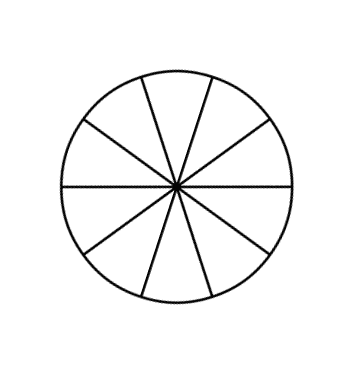
When it comes to cutting the cake, here’s what to know.
For this recipe to be medium oxalate, one serving needs to be about 1/10 of the cake.
Above is a diagram to show you how to cut it into 10 pieces. Start by cutting it in half, then each half into fifths.
Next, here’s a rundown on some of the ingredients and what to expect from them.
Gluten Free Flour
In this recipe, we’ve used cassava flour.
Wheat flour isn’t a high histamine food.
However, it is high lectin.
And some chemicals in bleached flours may contribute to mast cell activation. And as you may know, mast cell activation equals histamine release.
Additionally, gluten sensitivity is often found to be a reason for uncomfortable symptoms and reactions in the people we work with. It can trigger mast cell activation for that reason, too.
Related Article: Are Wheat and Gluten Really Mast Cell and Histamine Triggers?
That’s why we like to stick with gluten free flour for the low histamine diet, especially for those who are just starting to figure out their sensitivities.
Our favorite flour is Otto’s Cassava Flour.
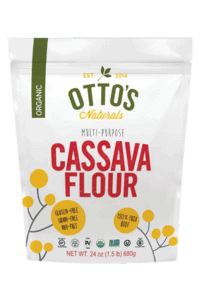
>>> Save 10% off your order of Otto’s Cassava Flour with code MASTCELL360
Low Histamine Sweetener
When we think of desserts, we often think “sweet”.
But for the low histamine diet, sugar, especially processed white cane sugar, is not recommended.
Sugar in general causes elevation in blood sugar levels.
Spikes in blood sugar can lead to an increase in histamine release. So, many people with Histamine Intolerance choose to go sugar free.
The glycemic index of different sweeteners varies.
The higher the glycemic index, the more of a spike you’ll get.
On our low histamine food list, you’ll find sweeteners:
- To avoid
- To use sparingly
- That are OK to use
We tried this recipe with monk fruit powder and stevia. We preferred it with stevia.
In our testers’ opinion, the stevia is more subtle.
We used 2 teaspoons.
Our tasters have more subtle preferences when it comes to sweet. They all thought this was enough.
But if you have a stronger sweet tooth, you can add more. But do so incrementally. A little goes a long way.
You can taste the batter to get an idea of if you need to add more or not. That’s what we did.
Even though we initially added the stevia in with the apples when making the puree, we did add some at the end once the batter had been formed. It will be fine for your cake to adjust the taste at the end like this.
Topping
Many olive oil cakes use a glaze rather than a frosting.
Glazes tend to be thinner and drizzled over top. Frostings tend to be thicker, creamy, and spreadable.
Citrus fruits like orange and lemon are common flavors in glazes for olive oil cakes.
But juices like lemon juice can be histamine liberators. Meaning they aren’t high histamine. But they can cause the body to produce or release histamine.
Some people do ok with very small amounts of citrus juice, such as a squeeze of lemon in a glass of water.
Others don’t tolerate it.
So, for this recipe, we used coconut cream, vanilla powder instead of vanilla extract, and applesauce.
It falls somewhere between a frosting and glaze.
This isn’t a super sweet topping. You can add a few drops of stevia if you like extra sweet.
Or you can use sweeter apples. We used green apples, which are more tart.
You can even skip it if you want. But all our tasters preferred the cake with the topping.
It adds moisture and sweetness to complement the cake. We prefer it this way too!
Enjoy!
What to Serve with Low Histamine Cake
- Frozen Vanilla Coffee Cooler – Low Histamine, Low Oxalate, Low Lectin, Low FODMAP
- Low Histamine Tulsi Rose Tea Recipe – Low Oxalate, Low Lectin, Low FODMAP

Low Histamine Cake with Olive Oil and Apple and Coconut Cream Topping
Equipment
- 10" Round Cake Pan
- Sifter
- Sharp Knife
Ingredients
For the Cake
- 1 Tablespoon Kasandrino’s Olive Oil for greasing the pan
- 2 cups Otto's Cassava Flour
- 1 teaspoon Baking Powder
- ½ teaspoon Baking Soda
- 1 teaspoon Raw Vanilla Bean Powder
- 3 Eggs
- 1 Organic Green Granny Smith Apples peeled and rough chopped (about ¾ cup apple puree)
- 3 Tablespoons Filtered Water
- 2 teaspoons Stevia
- ⅛ teaspoon Cardamom
- 1 cup Let’s Do Organic Coconut Cream
- ¾ cup Kasandrino’s Olive Oil
For the Topping
- 1 cup Let’s Do Organic Coconut Cream
- 1 Organic Green Granny Smith Apple peeled and rough chopped (about ¾ cup apple puree)
- ¼ teaspoon Raw Vanilla Bean Powder
Instructions
- Grease your cake pan with olive oil and set aside.
- Sift cassava flour, baking powder, baking soda and vanilla powder into a large bowl and set aside.
- In a medium bowl, whisk the eggs.
- Make your apple puree by adding the peeled and cored apple, water, stevia and cardamom seeds to a blender. Blend until a smooth puree forms. The consistency should be thicker than apple sauce, but not as thin as apple juice.
- Add the apple puree and coconut cream to the bowl with the eggs and stir to combine.
- Slowly stir in the olive oil to the wet ingredients mixture. DO NOT add it all at once (it changes the texture).
- Add the wet ingredients to the dry ingredients and stir until your batter comes together. The batter will be on the thicker side, not runny.
- Spoon your batter into your cake pan and cook at 350 for 32 minutes or until a toothpick comes out clean.
- While the cake is cooking, make the optional (but recommended!) apple coconut topping.
- To make the topping, add all the topping ingredients (coconut cream, apple, and vanilla powder) in a blender and blend until smooth and combined. You can add a few drops of stevia if you prefer a sweeter flavor profile.
Notes
Nutrition
Celebrating an occasion with this low histamine cake? We’d love to hear about it!
More Low Histamine Desserts
- Baked Peaches – Medium Oxalate, Low Lectin
- Baruka Nut Vanilla Mousse Recipe – Medium Oxalate, Low Lectin, Low FODMAP, Low Salicylate Option
- Carrot Cake Recipe – Low Lectin, Medium Oxalate
The website provides approximate nutrition information. Users should calculate the nutritional information with the actual ingredients and quantities they use in their recipes for the most accurate representation.
Some links in this website are affiliate links, which means Mast Cell 360 may make a very small commission if you purchase through the link. It never costs you any more to purchase through the links, and we try to find the best deals we can. We only recommend products that we love and use personally or use in the Mast Cell 360 practice. Any commissions help support the newsletter, website, and ongoing research so Mast Cell 360 can continue to offer you free tips, recipes, and info. Thank you for your support!
References
Di Bello, M. G., et al. (1998). Histamine release from rat mast cells induced by the metabolic activation of drugs of abuse into free radicals. Inflammation Research, 47(3), 122–130. https://doi.org/10.1007/s000110050299
Gharby, S. (2022). Refining vegetable oils: chemical and physical refining. The Scientific World Journal, 2022, 1–10. https://doi.org/10.1155/2022/6627013
Gorzynik-Debicka, M., et al. (2018). Potential health benefits of olive oil and plant polyphenols. International Journal of Molecular Sciences, 19(3), 686. https://doi.org/10.3390/ijms19030686
Hamilton, M. J., Scarlata, K., & Carol Rees Parrish, MS, RDN. (2020). Mast cell activation syndrome – What it is and isn’t. Practical Gastroenterology. https://med.virginia.edu/ginutrition/wp-content/uploads/sites/199/2020/06/Mast-Cell-Activation-Syndrome-June-2020.pdf
Hayes, J., & Benson, G. (2016). What the latest evidence tells us about fat and cardiovascular health. Diabetes Spectrum, 29(3), 171–175. https://doi.org/10.2337/diaspect.29.3.171
Histamine intolerance. (2025, June 2). Cleveland Clinic. https://my.clevelandclinic.org/health/diseases/histamine-intolerance
Hrubisko, M., et al. (2021). Histamine intolerance-The more we know the less we know. A Review. Nutrients, 13(7), 2228. https://doi.org/10.3390/nu13072228
Jimenez-Lopez, C., et al. (2020). Bioactive compounds and quality of extra virgin olive oil. Foods (Basel, Switzerland), 9(8), 1014. https://doi.org/10.3390/foods9081014
Korn, L., Ph.D., MPH, LMHC, ACS, FNTP (2024, April 26). The first, best change you can make for your brain and mood. Psychology Today. https://www.psychologytoday.com/us/blog/rhythms-of-recovery/202404/healthy-fats-for-mental-health
Park, H. H., et al. (2008). Flavonoids inhibit histamine release and expression of proinflammatory cytokines in mast cells. Archives of Pharmacal Research, 31(10), 1303–1311. https://doi.org/10.1007/s12272-001-2110-5
Persia, F. A., et al. (2014). Hydroxytyrosol and oleuropein of olive oil inhibit mast cell degranulation induced by immune and non-immune pathways. Phytomedicine, 21(11), 1400–1405. https://doi.org/10.1016/j.phymed.2014.05.010
Pizzino, G., et al. (2017). Oxidative stress: Harms and benefits for human health. Oxidative Medicine and Cellular Longevity, 2017, 8416763. https://doi.org/10.1155/2017/8416763
Revelou, P., et al. (2021). Chemometric study of fatty acid composition of virgin olive oil from four widespread Greek cultivars. Molecules, 26(14), 4151. https://doi.org/10.3390/molecules26144151
TMS – The Mast Cell Disease Society, Inc. (2022, August 27). Nutrition – TMS – The Mast Cell Disease Society, Inc. TMS – the Mast Cell Disease Society, Inc. https://tmsforacure.org/nutrition-old/
United States Department of Agriculture, Agricultural Marketing Service, & Fruit and Vegetable Programs Processed Products Branch. (2010). United States standards for grades of olive oil and Olive-Pomace oil. In FEDERAL REGISTER (p. 22363). https://www.ams.usda.gov/sites/default/files/media/Olive_Oil_and_Olive-Pomace_Oil_Standard%5B1%5D.pdf
Wang, X., Qi, Y., & Zheng, H. (2022). Dietary polyphenol, gut microbiota, and health benefits. Antioxidants (Basel, Switzerland), 11(6), 1212. https://doi.org/10.3390/antiox11061212
Wollin, A., Wang, X., & Tso, P. (1998). Nutrients regulate diamine oxidase release from intestinal mucosa. AJP Regulatory Integrative and Comparative Physiology, 275(4), R969–R975. https://doi.org/10.1152/ajpregu.1998.275.4.r969
Yang, Y., et al. (2013). Polyphenols differentially inhibit degranulation of distinct subsets of vesicles in mast cells by specific interaction with granule-type-dependent SNARE complexes. The Biochemical Journal, 450(3), 537–546. https://doi.org/10.1042/BJ20121256
Zhao, W., et al. (2013). The interaction between oxidative stress and mast cell activation plays a role in acute lung injuries induced by intestinal ischemia–reperfusion. Journal of Surgical Research, 187(2), 542–552. https://doi.org/10.1016/j.jss.2013.10.033
Add A Comment