
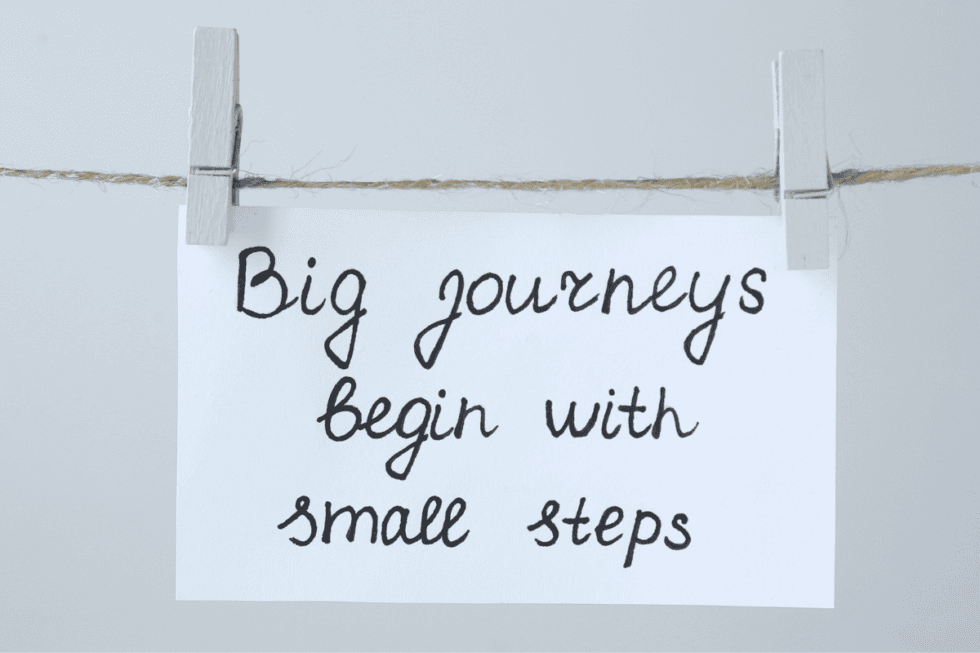
Healthy New Year’s Resolutions for MCAS: Setting Small Goals That Actually Work
Have you ever tried making healthy New Year’s resolutions or other goals throughout the year, but struggled to keep them? We have, too.
Many people struggle with being unrealistically strict or ambitious when setting goals. And this is especially true when managing Mast Cell Activation Syndrome (MCAS).
It’s completely understandable to want to make big changes! Especially when it comes to feeling better. But with MCAS, overly ambitious goals can even backfire.
One of our team members recalled a time when they committed to exercising 30 minutes a day, 5 days a week. It seemed reasonable at the time. But the reality was that some days they were too fatigued to even make dinner, much less exercise for half an hour.
The goal that was meant to improve their health became something that was actually making them feel worse instead.
Sound familiar?
We’ve also noticed that many of our clients are wonderful at prioritizing everyone else but struggle when it comes to prioritizing their own health and wellbeing.
We are all human. And these are human things to do.
So, we want to encourage you with some practical tips on how to frame your health resolutions and goals for the coming year. These strategies will help you create sustainable changes that actually work for YOU.
Most of all, if you’re struggling with MCAS, we want you to know there is hope. You can get better.
Yes, it does take some discipline and consistency to change your health and habits. But we believe in you!
In this post, you’ll learn:
- Mindsets for setting healthier New Year’s resolutions
- Why adding healthy habits (not just subtracting) makes a difference
- Some of the best goals and New Year resolutions for Mast Cell Activation Syndrome
Whether you want to calm your mast cells, finally get started on nervous system balancing, add foods, find more joy, or you are determined to reclaim your energy and health, these tips are designed with you in mind.
Healthy New Year’s Resolutions
Most of us love thinking about this time of year as a fresh start for new habits.
However, we don’t want you to waste your energy on self-care practices that may not have many health benefits.
Think about your New Year’s resolutions as a form of healthcare. How can you get the most out of your commitments for your overall health?
And how can you build a healthy lifestyle that will support your health for decades to come?
Let’s start first with thinking about a better mindset for New Year’s resolutions.
It’s important you know that this blog post is for educational and informational purposes. It’s not meant to treat any health condition or to be prescriptive for anyone. If you have any medical condition, it is critical you work under the care and guidance of a licensed medical healthcare provider.
Make Tinier New Year’s Resolutions
Have you ever made a goal or new achievement that was too ambitious? But then you got overwhelmed and ended up not making much of a change?
You’re not alone! It happens a lot. And science is showing that small, manageable changes are actually far more likely to work when you’re setting goals.
That’s true even when you don’t have chronic illnesses like Mast Cell Activation Syndrome or Histamine Intolerance.
So, we want you to consider how you can make tinier New Year’s resolutions.
What is a microstep you can take?
If you aren’t familiar with microsteps, here’s what they are. Think about the big changes you want to make. Now break that down into smaller, more manageable steps.
As you just read, small changes are more sustainable over the long term than big, drastic ones.
One of the most popular healthy New Year’s resolutions is increasing physical activity and exercise.
But if you are struggling with MCAS or chronic fatigue, any type of exercise can be very difficult.
We get it. We’ve been there ourselves. And we can’t tell you how many times we see people push to make it through a workout and be completely exhausted for days or even weeks afterwards.
Pushing through with MCAS often lands people in a place where they are worse off than when they started!
Let’s look at a real example of how to make tiny goals next.
An Example of a Tinier New Year’s Resolution with MCAS
One client, who we will call “Samantha,” struggled with severe oxalate joint pain. But she wanted to exercise to maintain muscle mass as she aged.
Doing even 5 reps wasn’t a realistic goal when it felt like she had shards of glass in her joints.
We encouraged Samantha to make a list of all her physical therapist’s recommended exercises. Then just tackle 1 of those exercises each week.
And with that one exercise, start with just 1 rep.
Samantha started week 1 with 1 leg raise per leg.
Yes, only 1 raise per leg.
But doing only 1 rep of 1 exercise meant she was able to finish her day at work. She simply marked each day she did the leg raise.
The next week, she did just 1 ankle lift.
The following week, she did her toe lift.
You might need to go even slower than that and do just 1 per week! Go as slow as you need to not make yourself feel worse.
For Samantha, it was the first time she had been able to complete a workout in over 5 years without it causing her to miss work.
She was so proud!
What are some small, measurable exercises you can do? And how can you make it more simple?
Consider the tiniest exercise routine to set yourself up for success.
More Tiny New Year’s Resolution Ideas for Mast Cell Activation Syndrome
The options are unlimited! You can pick anything that fits your needs.
Some tiny and healthy New Year’s resolutions for exercises might be:
- Extending your arms above your head once a week
- Getting upside down once a week, like legs up the wall
- Gently bouncing on a rebounder or trampoline for 10 seconds and working up slowly
Related Post: Why Lymph Drainage Is Important with Mast Cell Activation Syndrome (MCAS)
We’ll share more ideas for small New Year’s resolutions down below.
Next, we want you to consider reducing restrictive New Year’s resolutions.
Let’s look at that next.
Reduce Restrictive New Year’s Resolutions and Add Healthy Habits Instead
It breaks our hearts when we see clients stuck in a cycle of eliminating food after food. Many of us have been down to just a few foods ourselves.
Never reduce foods if you don’t have to.
And please beware of fad diets.
Instead, think about how to include as much variety as you can.
Whether you do a Low Histamine Diet or any other diet you need for a while, the goal is always to reduce as little as possible, for as short a time as possible. And eventually add more foods back!
Perhaps you try 1 new (to you) food a month from our low histamine foods list and figure out how to prepare it your favorite way.
For example, maybe you’ve never bought radishes before. You can try them:
- Sliced in half and roasted
- Julienned on a salad
- Diced in a stir fry
Trying new foods out in new ways then becomes part of your low histamine meal plan.
This applies to areas other than healthy eating too!
The best lifestyle changes are when you add healthy habits.
It is easy to slide into negative thinking where you obsess about what you want to avoid.
Instead, think about what you can add to enrich your life, instead of just cutting what’s inflammatory or challenging for you.
With healthy food, we want you to think about how you eat as more than weight loss or weight gain.
Think about how you can nourish your body with the most nutrient packed healthy diet.
Think about filling your plate with high-quality, whole foods like veggies and clean protein.
A client shared with us that her past New Year’s resolution was to eat a fresh herb once a day.
What a tiny, yet doable idea! Herbs are so nutrient dense and can support mast cells!
Aside from food, we want to share some ideas about what else you can add to your routines for a healthier lifestyle. These are realistic goals targeted to help those with MCAS.
But before that, we want to talk about cravings.
A Side Note on Food Cravings with MCAS
Many people with MCAS struggle with strong cravings.
In many cases, these are legitimate cravings for nutrients that are missing.
For example, protein and magnesium are commonly low.
The best solution for this is working with a healthcare provider who can do individualized testing for you to find out what you might be missing.
Hopefully, a good practitioner can help you get as much nutritional variety as possible and address your root causes.
Now that we’ve talked about not making restrictive New Year’s resolutions, let’s look at other mindset shifts.
More Healthy New Year’s Resolution Ideas for MCAS
This upcoming year, think about what foods and other habits you can add to support your health. Not just what you need to remove or avoid.
And remember, the smaller the resolution, the better!
Our hope in sharing these ideas is for you to pick just 1 or 2 to start.
Please don’t try to do all of these at once. Even though we’re sharing multiple options and how they can be done, none of us on the team are doing every single one every day.
What most of us do practice is some form of nervous system work daily. Our specific practices shift and vary, but we prioritize getting it in each day.
Note: If your new habits start to feel like a burden, you’re probably trying to do too much.
The smaller your New Year’s resolutions are, the more sustainable they’ll be in the long term.
We encourage you to:
- Pick just 1 practice to start with
- Begin with 1 to 2 minutes, a couple times a week
- Build slowly by adding 1 or 2 minutes each week
It’s that simple. Small, consistent steps add up to real change.
Let’s start with some of our favorite health goals for supporting your mental health and nervous system.
Forest Bathing: A Free Healthy Resolution for MCAS
We also want to encourage you to get outside more! There are so many benefits, like getting vitamin D and boosting your mood.
One of our favorite ways to do this is Forest Bathing.
Learn all about the benefits of forest bathing here.
It’s another easy way to get started and it’s free!
If you’re in a colder climate, here are some tips on getting morning sunlight.
It’s good to get outside every day, even if it’s just in your neighborhood or yard.
Perhaps this year, your healthy New Year’s resolution is to get outside for 30 seconds a day in the sun.
And if you want to take your healthy New Year’s resolutions to the next level, here are some tools that can help you do that.
Primal Trust for Nervous System Balance in MCAS
In our busy, modern world many people are stuck in a sympathetic nervous system state. You may have heard this system referred to as ‘fight, flight, or freeze’. This is especially true for those with MCAS.
And because your nervous system and mast cells communicate constantly, it means your mast cells get stuck in that reactive state, too.
But it also works the other direction. So, a calmer nervous system means calmer mast cells.
To restore nervous system balance, you need to work on 2 key areas: limbic (brain) and your vagus nerve. Doing so improves your ability to switch between the two nervous system states (parasympathetic and sympathetic).
Related Post: Nervous System Balance is Essential in Mast Cell Activation Syndrome
What we like about Primal Trust is that it helps you learn techniques to regulate the limbic system AND tone the vagus nerve to restore balance. Many programs only work on one or the other.
Being able to balance the nervous system is a big part of healing!

>>> Use coupon code 10MC360 for $10 off your first month!
NuCalm: Daily Nervous System Reset for Mast Cells
One of our top recommendations to clients is to carve out 15 to 20 minutes daily for a nervous system reset.
Why is this so important when you have MCAS?
Because, as you just read, the state of your nervous system affects your mast cells.
This means a daily nervous system practice can help you calm flares and make a significant impact on your MCAS over time.
And NuCalm is another of our favorite tools. It is clinically proven to lower stress and improve sleep! Which makes it a perfect way to wind down.
NuCalm can be a good place to start if you want something simple and are not ready for a full program yet.
Another reason we like NuCalm is that it’s easy to use. Healing is an active process and it’s nice to have a tool now and then that works while you rest!
We love that you can turn this app on and just relax.
Now, some of the programs may be too intense if you are just starting out and hypersensitive. So, we suggest the SleepSuite. And starting low and slow with a few minutes of Rescue to see how you do. Then you can gradually add DeepSleep.
You can try it for free to see if it’s a good fit for you!
>>> Use coupon code MC360 for a free 7-day trial then $9.99/month for 3 months!
Learn more in our Facebook Live on NuCalm with David Poole.
Some of our team and clients prefer headphones for their apps, like NuCalm.
We like these air tubes from Shield Your Body to reduce EMF exposure.
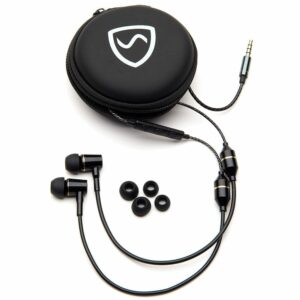
>>> Use coupon code MASTCELL20 to get 20% off your Shield Your Body order!
Epsom Salt Baths for MCAS Support
You might be ready for Epsom salt baths if you have done nervous system stabilization and are on mast cell supports.
This is not a starter step.
Epsom salt is a form of magnesium bound to sulfate. Sulfation is a major part of Phase 2 detox in your liver. When you soak your feet or take a bath with magnesium sulfate, you absorb it through your skin.
If you haven’t taken an Epsom salt bath before, you may need to start with a few granules and build slowly.
We’ve seen people start with even just a couple of teaspoons that sent them into an oxalate flare. So, start low and work up slowly.
You must also check the ingredients to ensure that it is only magnesium sulfate. Beware of added fragrances or other fillers.
We like to buy these bags of Epsom salt in bulk.

Alternatively, you may tolerate magnesium chloride flakes better.

Better Sleep Hygiene for MCAS and Histamine Intolerance
One of the best things you can do for your health is improve your sleep hygiene.
So many people with MCAS struggle with insomnia.
One of the best ways to increase your hours of sleep is to go to sleep earlier. This is harder than it sounds though.
And as you move your bedtime up, here are some better ways to decompress.
Replace Screen Time with MCAS-Friendly Nighttime Routines
Some may encourage you to limit your screen time after the sun goes down.
Think about how you can replace your screen time with a better habit.
What can you add in?
Remember, you want to reduce restrictive resolutions and focus on what you want to add instead.
If you want to quit doing screen time before bed, use one of these healthier habits to wind down for the day:
- Read a book (or listen to an audiobook)
- NuCalm DeepSleep
- Resonant Breathing
- Journaling
- Epsom Salt Bath
- Drink Low Histamine Tea like chamomile
- Note: Teas are often high salicylate, while chamomile may be okay, you’ll want to avoid others if you have Salicylate Intolerance
- Diffuse and inhale soothing essential oils (here are the best ones for MCAS)
- Enjoy a new hobby on paper like a sudoku puzzle or wordsearch
Related Post: Fixing Sleep Challenges in Mast Cell Activation Syndrome and Histamine Intolerance
Healthy New Year’s Resolutions for MCAS
Remember to pick just 1 or 2 things from the above ideas to try in the new year. Or come up with your own!
Can you imagine if you added 1 new small healthy habit a month what your health would be like in 1 year?
That may seem like a lot, but if you break it into microsteps, it can be very doable. Think of these as tinier New Year’s resolutions.
Also, when we share our New Year’s resolutions with others, it helps us hold ourselves accountable.
Our Team’s Healthy New Year’s Resolutions
We’ll start. And since we’ve given you some examples of how to start with very tiny goals, we’ll give you an example of how to break down bigger goals over time here.
The fact that our team works hard probably isn’t surprising if you’ve followed us for long. And we see this pattern with clients, too.
And this can be especially true as you heal! It’s tempting to overdo things when you start to feel better because you’ve been limited for so long. Been there.
We really do try to walk our talk as a team, but we’re human, too. And we’ve realized from time to time that things need to shift when we haven’t been taking care of ourselves the way we want to.
We’re sharing this because we want you to know we’re not perfect.
We do get in our supplements every day, work on our nervous systems daily, and eat cleanly, but figuring out work-life balance is an ongoing process.
“Overdoing it” can look different for each person. Some people in our community can work 10 hours a week. Others can work 40. Some are not able to work at all and just getting through each day is a challenge.
If you notice your daily schedule is affecting your physical and mental health in unhelpful ways, that’s a good indicator you need to make some changes.
So, one New Year resolution many of us as a team have made (and continue to make each year) is to prioritize healthy self-care and better balance.
You’ll often hear us talk about small steps. So, let’s look at how that may break down into goals next.
Breaking Down Health Goals into Manageable Steps
In order to be successful in making healthier changes, we need to break bigger resolutions like “prioritizing self-care” down into smaller steps.
We’ll use an example from someone on the team who was feeling much better in their own journey and working 40 hours a week, or often more!
They realized it meant they were skipping self-care. So, they set a goal to work 30 hours each week and use that extra time and energy to prioritize daily self-care.
Here’s what breaking down that goal might look like:
- January – Work 3 to 4 hours less per week. Those hours can be spent for self-care routines and time with family. A small add-in goal would be to also stop every hour while working and take 4 deep, cleansing breaths to help reset the nervous system during the day.
- February – Work 8 hours less per week. This would allow time for more exercise, eating earlier in the evening, and a better sleep schedule. An add-in goal might also be getting up to stretch and move every 1 to 2 hours while working.
- March – Go down to a 30-hour work week. The extra time can be used to incorporate some fun activities into life while continuing daily self-care routines.
- April – Re-evaluate. How is it going? What needs to be adjusted?
Some of us actually write things like this on our calendars as reminders.
And not all our goals are big. Some of our smaller goals are things like:
- Get up once every hour to move
- Get 10 minutes of sunshine first thing in the morning
- Eat dinner by 6:30 pm each night
- Spend 1 hour each week on something that brings joy
- Add foot baths
Goals can be big (and broken down into smaller steps) or very small (like 1 minute of breathing).
We’re sharing our journeys with you because it’s important to connect as a community.
We know what it is like to not have anyone understand what you’re going through. And we know the joy of finding out that there is hope!
This is why we share so many personal struggles with you. We want you to know you aren’t alone.
And we all still need help sometimes, too.
What Will Your Tiny Resolution Be?
As you think about the upcoming year, remember that the smallest steps often lead to the biggest changes over time.
Maybe you’ll start with just 30 seconds of morning sunlight.
Or 1 fresh herb added to a meal each day.
Or 2 minutes of resonant breathing before bed.
Whatever you choose, make it small enough that you can succeed. And, if you choose a big goal, break it down into smaller goals.
And remember, those small changes add up!
Will you share what your healthy New Year’s resolution or goal will be in the comments below?
We’d love to hear from you. Sharing can be so encouraging.
More Healthy Lifestyle Resources for MCAS
- Resonant Breathing
- Forest Bathing Benefits
- Air Doctor Air Purifier Review
- AquaTru Water Filter Review
- The Best Supportive and Non Toxic Mattress
- Low Histamine Food Ideas – Plus Top Tips for Less Stress Celebrations with MCAS
Some links in this website are affiliate links, which means Mast Cell 360 may make a very small commission if you purchase through the link. It never costs you any more to purchase through the links, and we try to find the best deals we can. We only recommend products that we love and use personally or use in the Mast Cell 360 practice. Any commissions help support the newsletter, website, and ongoing research so Mast Cell 360 can continue to offer you free tips, recipes, and info. Thank you for your support!
References
Jayavarapu, P., Sajjad, A., Sajjad, A., & Ravirala, S. (2025). Behavioral Adherence to Anti-aging Protocols: Comparing “Big Steps” versus “Baby Steps” in Lifestyle Interventions. International Journal of Social Science and Economic Research. https://doi.org/10.46609/ijsser.2025.v10i08.014.
Howlett, N., Trivedi, D., Troop, N., & Chater, A. (2018). Are physical activity interventions for healthy inactive adults effective in promoting behavior change and maintenance, and which behavior change techniques are effective? A systematic review and meta-analysis. Translational Behavioral Medicine, 9, 147 – 157. https://doi.org/10.1093/tbm/iby010.
Shadat, M., , A., & Chowdhury, S. (2025). Small changes, big impact: A mini review of habit formation and behavioral change principles. World Journal of Advanced Research and Reviews. https://doi.org/10.30574/wjarr.2025.26.1.1333.



I want to commit to more outside time in the colder months. I’m going to start with a tiny resolution of adding in morning sunlight for 60 seconds while I sip my morning warm ginger water!