
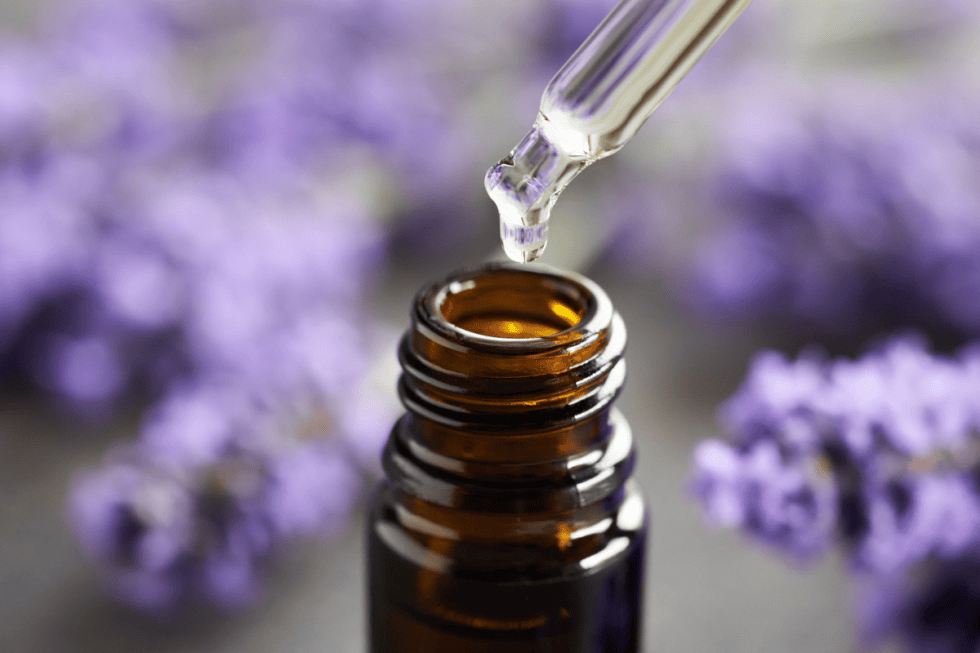
Essential Oil Antihistamine Support for MCAS and Histamine Intolerance
We get asked about a lot of support options for Histamine Intolerance and Mast Cell Activation Syndrome (MCAS). And essential oils come up often, especially whether they can work as a natural antihistamine support.
The short answer is yes, some essential oils do have properties that support your body’s ability to manage histamine or symptoms from histamine.
But not all oils are safe for MCAS, and a few can actually make things worse. And knowing the difference is what this post is about.
Beth’s journey with essential oil antihistamine support started almost 20 years ago with a single sniff of therapeutic-grade Frankincense that cleared a debilitating headache.
What she learned from that moment, and from the doctorate-level research that followed, is still part of how we approach them with sensitive clients.
In this post, we’ll share what we’ve learned about using essential oils safely as natural remedies for MCAS and Histamine Intolerance. You’ll learn:
- What essential oils are and how they work
- Tips if you are sensitive
- Our top 6 recommended oils
- Some of our favorite blends
- Which oils to avoid
- How to find quality you can actually trust
Let’s get started.
A Skeptic’s First Experience With Essential Oils
The first time Beth smelled a truly high-quality essential oil, she was skeptical.
Here’s how she describes it:
“It was almost 20 years ago. I walked into a presentation on therapeutic essential oils with a major headache. You know the kind, the one that clouds everything.
I didn’t know back then that I had both Mast Cell Activation Syndrome and Histamine Intolerance. I certainly didn’t know the root triggers for my headaches. So I didn’t know how to stop them.
When the sample of high-quality Frankincense was passed around, I smelled it skeptically. But with one good sniff, my headache went away. It was so dramatic.
I’d tried other essential oils before and they never did much. But this therapeutic-grade Frankincense was vastly different from anything store-bought I had tried.
I became fascinated with learning how it worked. I dove into the legitimate research and eventually took doctorate-level courses in essential oils, studying their effects on the limbic and nervous system, the immune system, the hormone system, the digestive system, and more.”
What Beth learned in those years of study is still part of the core of using them in the clinic with clients. Essential oils won’t replace the deeper root cause work. But for the right person, they can act as a meaningful support tool and even support histamine levels.
What Are Essential Oils and How Do They Work?
Essential oils are natural substances extracted from plants. Those plant compounds protect the plant, feed it, and keep it healthy.
Research shows many of these compounds can also help support your body in different ways.
As histamine support, essential oils don’t block H1 receptors directly the way antihistamine drugs do. Their antihistamine-like effects come primarily from preventing histamine release at the mast cell level, reducing inflammation through calming inflammatory pathways, and in some cases modulating other receptor systems.
This is part of what makes some essential oils a useful addition alongside antihistamines. Rather than blocking histamine after release, they can work upstream, helping to prevent issues before they start.
And as Beth’s story shows, sometimes just the aroma alone is healing.
Your sense of smell is one of the most direct pathways to your brain.
Unlike other senses, scent signals travel almost instantly to the limbic system, the part of your brain that regulates emotion, memory, and stress response. It’s why a certain smell can shift your mood before you’ve even had time to think about it. A calming oil like lavender can take the edge off anxiety within minutes. Or something like peppermint can clear mental fog and lift a low mood just as quickly.
Here are some of the ways essential oils may support your body:
- Immune system support
- Cell regeneration
- Antioxidant properties
- Stress and frustration reduction
- Mood and emotion support
- Digestive system support
- Pain relief support
- Antibiotic and antimicrobial properties
- Skin health
They can even help you clean your house!
Are Essential Oils Legitimate?
Essential oils are used in different ways. The most common ways to use them for Mast Cell Activation Syndrome and Histamine Intolerance are:
Yes. Some hospitals have even started using essential oils for help healing infections, reducing stress, and relieving anxiety and depression. And they’ve been used for centuries by healers across many different cultures.
And today you’ll find them in foods, skincare and hair products, cleaning products, supplements, and more.
But not all essential oils are created equal. Brands vary greatly in quality, purity, and strength.
Some contain added chemicals that can trigger allergic reactions and be toxic, especially for those with Mast Cell Activation Syndrome and Histamine Intolerance.
We only use and recommend therapeutic-grade essential oils. More on what that means below.
Storage tip: Keep essential oils in dark-tinted glass containers in a cool, dry place. Light and heat degrade the compounds that make them effective.
Tips for Using Essential Oils with MCAS and Histamine Intolerance
Essential oils are used in different ways. The most common ways to use them for Mast Cell Activation Syndrome and Histamine Intolerance are:
- Diffusion: Using a diffuser is often the safest way to start. If you want to start even slower, you can just open the bottle and take a small sniff or mix it with a carrier oil and use 1 drop on a cotton ball in a dish.
- Topically: This is when you apply essential oils directly to the skin.
- Internally: Some oils can be ingested, but not all are safe for internal use. You need to be really careful about what you use internally.
Remember that therapeutic grade essential oils are highly potent. Even their aromas can be strong. And many need to be diluted to use them safely.
That’s where carrier oils come in. They dilute strong essential oils to make them safer for skin or internal use. Some essential oils will cause skin irritation or burning without one.
We recommend everyone with MCAS or Histamine Intolerance use a carrier oil, especially when starting out.
Examples of common carrier oils are:
- Extra Virgin Coconut Oil
- Extra Virgin Olive Oil
- Jojoba Oil
- Argan Oil
- Almond Oil
How to dilute essential oils:
- For a very gentle essential oil blend: 1 drop essential oil to 1 teaspoon carrier oil
- For a mild essential oil blend: 2 drops essential oil to 1 teaspoon carrier oil
- For a potent essential oil blend: 5 drops essential oil to 1 teaspoon carrier oil
As you can see, even the potent blend is very diluted.
But the safest option for those with Mast Cell Activation Syndrome or Histamine Intolerance is inhalation. Especially if you have supplement sensitivities.
You can consider starting with just a little bit in a nebulizing diffuser like the one below.

Now, how do you find a good quality oil?
How to Find Quality Essential Oils for MCAS
We’ll tell you soon about the top 6 go-to essential oils for Mast Cell Activation Syndrome and Histamine Intolerance.
But first, it is really important to make sure you get good quality essential oils. This makes a huge difference.
There are a number of great Essential Oil companies with very high-quality oils. And there are companies that look great, but really aren’t.
We know of at least one company that claims their products are pure essential oils. But when you dig deeper, you find they also use synthetic fragrance. We finally figured this out because that company’s oils always gave some of us headaches or we reacted to their oils.
It’s very hard to tell which companies are the best without doing a lot of research.
This is our criteria for an essential oil company:
- Top quality extraction process
- No adulteration
- Lists all the ingredients
- Uses NO synthetic fragrance
- Independent, 3rd party GC/MS testing
- Excellent customer service
- Money back guarantee
- NO Multi-level marketing
- In business for at least 10 years
- Excellent reviews
- Good pricing
After experimenting with dozens of companies and working with over 100 different essential oils, our go-to picks are:

>>> Click here to shop Vibrant Blue Oils and Save 15% with code MASTCELL360
>>> Click here to shop Rocky Mountain Essential Oils
Now, there are other good companies out there too. These aren’t the only ones. But these both meet all the criteria above. Have easy ordering and excellent customer service.
Now that you have a couple of options for where to shop, let’s look at the oils!
Gentle Essential Oils for MCAS and Histamine Intolerance
For those who are ready to try an essential oil, a single oil is often a good place to start.
With a single oil you are changing just one thing. And if you do okay with those or are more robust or further along in your journey, you may do okay with blends.
We’ll talk about a few blends at the end, but let’s start with the top single oils we use personally and recommend in the clinic.
Important Note: if you have Salicylate Intolerance you may need to wait until your intolerance improves, even for inhalation. While there is a lot we don’t know about salicylate content in general because testing has never been done, flowers and resins (chamomile, rose) tend to be lower salicylate than things like herbs which are very high salicylate (peppermint, wintergreen, thyme). Resin-rich oils (frankincense, spruce, juniper) can also contain higher levels of terpenes. All essential oils contain some terpenes, and while these are not salicylates they do act on some of the same biochemical pathways. So people with salicylate sensitivities may react to terpenes, too.
Histamine Supporting Oils
f your primary interest in oils is histamine support, these are a few with the most research behind them. You’ll see a some of them mentioned again below. Oils can be mast-cell friendly supports for many uses!
Let’s look at some of the oils we use and recommend most for mast cell and histamine support individually and what some of the many potential benefits are.
Organic Lavender
Versatile and tolerated by many people, this is one of the gentlest places to consider starting. We love this one mixed with aloe for sunburns! And relaxing bedtime routines.
Potential benefits include:
- Mast cell support
- Eases stress and anxiety
- Supports sleep
- Immune system support
- Soothes sore muscles and joints
Generally considered okay for inhalation, diffusion, or topical use. Occasional ingestion is considered acceptable by some but dilute well if you choose to do so.
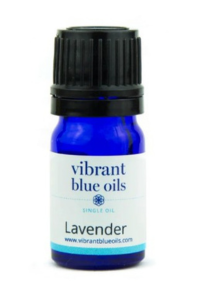
>>> Get Lavender from Vibrant Blue Oils and save 15% with code MASTCELL360
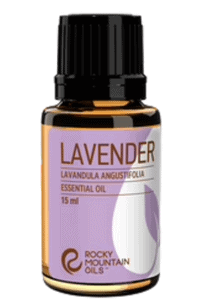
>>> Get Lavender from Rocky Mountain Oils
Frankincense
Frankincense is one of the most well-researched oils. Beth’s journey with essential oils started here, and it remains a staple.
Many people tolerate this one well and find it helpful.
Potential benefits include:
- Mast cell support
- Anti-inflammatory properties
- Immune system support
- Respiratory health support
- Stress reduction
- Antimicrobial properties
- Eases muscle and joint soreness
Generally considered okay to be inhaled directly, diffused, or applied to skin with a carrier oil.
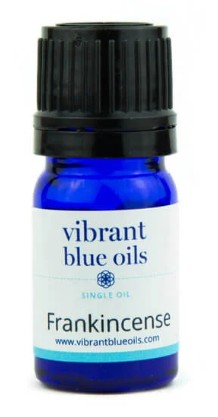
>>> Buy Frankincense and save 15% off Vibrant Blue Oils with code MASTCELL360

>>> Shop for Frankincense at Rocky Mountain Oils
Holy Basil
Holy Basil (Tulsi) as a tea is very supportive. In the oil, you get concentrated benefits.
Potential benefits include:
- Strong mast cell supporting properties
- Stress relief
- Heart health support
- Antimicrobial, antibacterial, antibiotic, and antiviral properties
- Shown in research to help with asthma, hay fever, respiratory illness, and fevers
- Anti-inflammatory properties and Vitamin C
- Helps with skin irritation and hives
Generally considered okay to be inhaled or applied to skin with a carrier oil. Not for internal use.
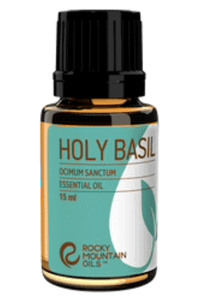
>>> Get Holy Basil from Rocky Mountain Oils
Organic Eucalyptus Radiata
A go-to for respiratory and sinus support. Works as a natural decongestant and is one of the gentler eucalyptus essential oil varieties.
Potential benefits include:
- Mast cell supporting properties
- Anti-inflammatory properties
- Antimicrobial, antibiotic, antiseptic properties
- Clears nasal passages, eases sinus congestion, reduces sneezing, relieves a runny nose, relieves cough
- Eases joint and muscle pain
- Reduces stress
Generally considered okay to be inhaled or applied to skin with a carrier oil. Mixes well with lavender, sage, ginger root, and tea tree oil in a diffuser. Not for internal use.
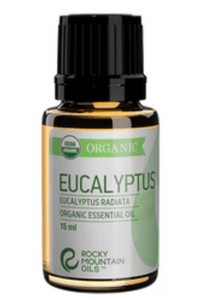
>>> Get Eucalyptus Radiata from Rocky Mountain Oils
Ginger Root
Ginger can be helpful for digestive and gut motility support, among other things.
Potential benefits include:
- Promotes mast cell stabilization
- Antioxidant properties
- Digestive health support
- Mood support
Generally considered okay to be diffused or applied topically with a carrier oil. Can be ingested occasionally, dilute significantly if you do.
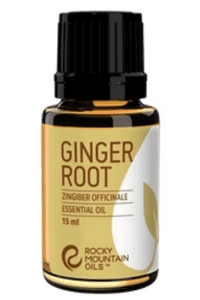
>>> Get Ginger Root from Rocky Mountain Oils
Myrrh
Myrrh is a mast cell friendly anti-inflammatory and dental support.
Potential benefits include:
- Shown in research to reduce inflammatory cytokine levels
- Mast cell support
- Strong anti-inflammatory properties
- Pain relief
- Antimicrobial properties
- Dental and gum health support
Generally considered okay to be applied to skin with a carrier oil, or use diluted on the gums.

>>> Get Myrrh from Rocky Mountain Oils
Essential Oil Blends for Antihistamine and Nervous System Support
If you’re just starting out or highly sensitive, beginning with one of the single oils above is the gentler approach. But if you’re a bit further along in your healing journey and tolerating things reasonably well, blends can offer more targeted support in a single bottle.
Below are some of our favorite blends, including options specifically formulated for essential oil antihistamine support.
Histamine Balance Blend
This pre-formulated blend includes several essential oil antihistamine supports. The carrier oil is already included.
Contains:
- Blue Tansy (Tanacetum annuum)
- Lavender (Lavandula angustifolia)
- Manuka (Leptospermum scoparium)
- Ravintsara (Cinnamomum camphora)
- Roman Chamomile (Anthemis nobilis)
- Rosemary (Rosmarinus officinalis ct Camphor)
- Peppermint (Mentha piperita)
- Spruce (Tsuga canadensis)
- Vetiver (Vetivera zizanioides)
- In a base of Fractionated Coconut Oil
Generally considered okay to be diffused or use topically with care. Not for internal use.
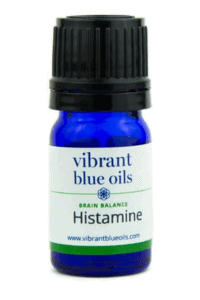
>>> Get the Histamine Balance Blend from Vibrant Blue Oils and save 15% with code MASTCELL360
If you are very still sensitive a better option might be Blue Tansy. It’s the main ingredient in the formula above, but as a single oil.
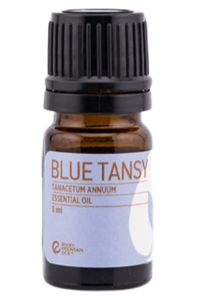
>>> Click to shop for Blue Tansy from Rocky Mountain Oils
Parasympathetic Blend
For many people with MCAS, the nervous system piece is just as important as the histamine piece. When your body is stuck in fight-or-flight, mast cells are more reactive. This blend is designed to help shift that.
Contains:
- Clove Bud (Eugenia caryophyllata)
- Distilled Lime (Citrus aurantifolia)
- In a base of Fractionated Coconut Oil
Applied to the mastoid bone (the small bony bump just behind the ear) it works by stimulating the vagus nerve, which activates the parasympathetic “rest and digest” state. This is one of the most targeted ways to use an essential oil for nervous system calming.
Several people on our team use this one regularly, and it’s a consistent recommendation in the Mast Cell 360 clinic for clients dealing with nervous system dysregulation.
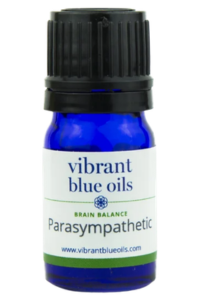
>>> Get the Parasympathetic Blend from Vibrant Blue Oils
Note: This blend contains clove and lime oils. We generally include both on our list of ingredients to avoid but here is where nuance comes in. This blend is specifically formulated for topical application to the mastoid bone, not for diffusing or internal use. That changes the way it interacts with your body. If you’re still very sensitive, start slow or start with a single oil like lavender or frankincense first.
Nerve Support
This pre-formulated blend is one of our team’s most-used for nervous system calming and sleep support. The carrier oil is already included, or you can dilute it further as needed.
Contains:
Bonus Essential Oil Nerve Calm Blend for those with Mast Cell Activation Syndrome and Histamine Intolerance
There are essential oil blends that can be helpful too. This blend has some great mast cell supporting oils. It already has the carrier oil, too. So you don’t have to dilute it.
It contains:
- Basil
- Helichrysum italicum
- Peppermint essential oil
- Marjoram
- In a base of 80% Fractionated Coconut Oil
Several of us on the team find this helps with sleep. Beth used it after a concussion and found it genuinely soothing to the nervous system.
Generally considered okay for inhalation or topical use with care. Not for internal use.

>>> Get Nerve Support from Rocky Mountain Oils
Essential Oils to Avoid with MCAS and Histamine Intolerance
Essential Oils to be careful with or avoid if you have Mast Cell Activation Syndrome and Histamine Intolerance because they can be overstimulating.
Keep in mind that oral use is different from using something topically or through smell.
Here are some of those essential oils to know about with mast cell and histamine issues:
- Cinnamon and blends with cinnamon – is very histamine liberating. This means that it causes mast cells to release histamine.
- Nutmeg and blends with nutmeg – also histamine liberating
- Clove and blends with clove – clove can be histamine liberating but it can also be very helpful for some people used topically. We see mixed results with products that have this in it, so approach them carefully.
- Citrus Essential Oils – don’t use internally, very histamine liberating.
- Juniper, Pine, Spruce – avoid if allergic to these tree species
- Chamomile – avoid if allergic to ragweed
Who Should Use Essential Oils with MCAS
If you have MCAS or Histamine Intolerance, essential oils may be a genuinely helpful tool for:
- Immune support
- Stress and anxiety
- Joint and muscle pain relief
- Anti-inflammatory support
- Mast cell stabilization
- Antimicrobial and antiviral support
- Respiratory health
Essential oils can also promote:
- Immune system balance
- Emotional balance
- Heart health
- Healthy skin
- Respiratory health
If you’re sensitive to perfumes, you may still do well with therapeutic-grade essential oils. There’s a real difference between synthetic fragrance and quality plant-derived oils. It comes down to purity and quality.
Who Shouldn’t Use Essential Oils with MCAS
A small number of people may not tolerate any essential oils yet or shouldn’t use essential oils at all.
- If you’re allergic to a plant — don’t use that oil. For example, a ragweed allergy means avoiding chamomile, and a tree allergy may mean avoiding juniper or spruce.
- If you can’t tolerate any supplements — stick to diffusing only. Don’t use topically or orally.
- If you have Salicylate Intolerance — careful inhalation use only or wait until tolerance improves. No topical or internal use.
- If any essential oil smell gives you headaches or makes you feel worse — stop.
People who react to all essential oils typically have significant toxicity or limbic/parasympathetic dysregulation. It doesn’t mean essential oils are off the table forever. Some people with major Mold Toxicity do fine with therapeutic-grade essential oils and others tolerate them as they improve. But if you’re reacting to everything right now, address those root causes first.
If you’re unsure, start with just a sniff of a bottle and see how you feel before going further. Like anything with MCAS, going slow can be helpful.
Essential oils are one way to support healthier histamine levels and mast cells. But for many people with MCAS and Histamine Intolerance, they work best alongside mast cell supporting supplements.
If you want to go deeper on what we use in the clinic with clients to stabilize mast cells and lower histamine naturally, our Top 8 Supplements Master Class walks through the supplements we use most, onboarding tips for success when you are sensitive, what to do in a flare, and more.
Have you ever tried essential oils antihistamine supports? Or do you have an oil you love to use for other support? Let us know in the comments below!
More Ways to Support Yourself with MCAS
- Low Histamine Foods List for Mast Cell Activation Syndrome (MCAS) and Histamine Intolerance
- The Mast Cell 360 Guide to Our Favorite Kitchen Staples and Top Low Histamine Food Tips
- Safe Skincare for Those With MCAS and Histamine Intolerance
- Non Toxic Cleaning Products for Mast Cell Activation Syndrome, Histamine Intolerance, and Chemical Sensitivity
References
Ammon, H. P. T. (2002). Boswellic acids (components of frankincense) as the active principle in treatment of chronic inflammatory diseases. Wiener Medizinische Wochenschrift, 152(15–16), 373–378. https://doi.org/10.1046/j.1563-258X.2002.02056.x
Antunes Viegas, D., Palmeira-de-Oliveira, A., Salgueiro, L., Martinez-de-Oliveira, J., & Palmeira-de-Oliveira, R. (2014). Helichrysum italicum: From traditional use to scientific data. Journal of Ethnopharmacology, 151(1), 54–65. https://doi.org/10.1016/j.jep.2013.11.005
Bagetta, G., Cosentino, M., & Tsukasa, S. (2016). Aromatherapy: Basic Mechanisms and Evidence Based Clinical Use (1st ed.). Boca Raton, FL: CRC Press.
Balasubramaniam, V. B., Ramamoorthy, V., Balasubramanian, S., Annamalai, S., & Ravichandran, D. (2025). Molecular docking analysis of phytoconstituents from Nilavaagai Chooranam with histamine H1 receptor. Bioinformation, 21(3), 511–518. https://doi.org/10.6026/973206300213511
Buckle, J. (2015). Clinical Aromatherapy: Essential Oils in Healthcare (3rd ed.). St. Louis, MO: Elsevier.
Cardia, G. F. E., Silva-Filho, S. E., Silva, E. L., Uchida, N. S., Cavalcante, H. A. O., Cassarotti, L. L., Salvadego, V. E. C., Spironello, R. A., Bersani-Amado, C. A., & Cuman, R. K. N. (2018). Effect of lavender (Lavandula angustifolia) essential oil on acute inflammatory response. Evidence-Based Complementary and Alternative Medicine, 2018, 1413940. https://doi.org/10.1155/2018/1413940
Chandrashekhar, V. M., Halagali, K. S., Nidavani, R. B., Shalavadi, M. H., Biradar, B. S., Biswas, D., & Muchchandi, I. S. (2011). Anti-allergic activity of German chamomile (Matricaria recutita L.) in mast cell mediated allergy model. Journal of Ethnopharmacology, 137(3), 1284–1288. https://doi.org/10.1016/j.jep.2011.07.044
Ettakifi, H., Abbassi, K., Maouni, S., Erbiai, E. H., Rahmouni, A., Legssyer, M., Saidi, R., Lamrani, Z., Esteves da Silva, J. C. G., Pinto, E., & Maouni, A. (2023). Chemical characterization and antifungal activity of Blue Tansy (Tanacetum annuum) essential oil and crude extracts against Fusarium oxysporum f. sp. albedinis. Antibiotics, 12(9), 1451. https://doi.org/10.3390/antibiotics12091451
Georgantopoulos, A., Vougioukas, A., Kalousi, F. D., Tsialtas, I., & Psarra, A. M. G. (2023). Comparative studies on the anti-inflammatory and apoptotic activities of four Greek essential oils: Involvement in the regulation of NF-κB and steroid receptor signaling. Life, 13(7), 1534. https://doi.org/10.3390/life13071534
Jarvis, G. E., Barbosa, R., & Thompson, A. J. (2016). Noncompetitive inhibition of 5-HT3 receptors by citral, linalool, and eucalyptol revealed by nonlinear mixed-effects modeling. Journal of Pharmacology and Experimental Therapeutics, 356(3), 549–562. https://doi.org/10.1124/jpet.115.230011
Kim, H. M., & Cho, S. H. (1999). Lavender oil inhibits immediate-type allergic reaction in mice and rats. Journal of Pharmacy and Pharmacology, 51(2), 221–226. https://doi.org/10.1211/0022357991772178
Mitoshi, M., Kuriyama, I., Nakayama, H., Miyazato, H., Sugimoto, K., Kobayashi, Y., Mimaki, Y., Yamada, J., Yoshida, H., & Mizushina, Y. (2014). Suppression of allergic and inflammatory responses by essential oils derived from herbal plants and citrus fruits. International Journal of Molecular Medicine, 33(6), 1643–1651. https://doi.org/10.3892/ijmm.2014.1720
Price, S., & Price, L. (2012). Aromatherapy for Health Professionals (4th ed.). London, UK: Elsevier.
Tisserand, R., & Young, R. (2014). Essential Oil Safety: A Guide for Health Care Professionals (2nd ed.). London, UK: Elsevier.
Vigo, E., Cepeda, A., Gualillo, O., & Perez-Fernandez, R. (2004). In vitro anti-inflammatory activity of Pinus sylvestris and Plantago lanceolata extracts: effect on inducible NOS, COX-1, COX-2 and their products in J774A.1 murine macrophages. Journal of Pharmacy and Pharmacology, 56(10), 1333–1341. https://doi.org/10.1211/0022357044469
Yoon, J. Y., Lee, S., Shin, Y., Choi, J. A., & Sohn, S. (2010). Effect of German chamomile oil application on alleviating atopic dermatitis-like immune alterations in mice. Journal of Veterinary Science, 11(1), 35–41. https://doi.org/10.4142/jvs.2010.11.1.3



What “carrier” oils can you use besides coconut oil?
It’s stated in article:Extra Virgin Coconut Oil
Jojoba Oil
Argan Oil
Almond Oil
Extra Virgin Olive Oil
I also use arnica oil, calendula oil… There you go
raspberry seed oil is also great
carrot oil and broccoli oil are also good
Thank you so much for this information! I have been searching for reliable information on essential oils and MCAS. I used to use them often, and have avoided them since I developed MCAS, and thankful to have a direction to go forward.
Why is it important to stay away from MLM oil companies? This is not a loaded question, I genuinely want to know because I have a neighbor who wants to help me with samples of oils.
I’ve been a distributor for 2 MLM essential oil companies and didn’t like their practices. You have to buy through a distributor and can’t easily order on your own, or have to become a distributor. With becoming a distributor, there are required minimal purchases. There is always more markup to cover more marketing and upline profits. Also, I’ve seen the MLM essential oil companies be very profit driven over safety and strongly push internal use of oils at very unsafe levels to drive purchases. There have been many cases of organ issues with following those recommendations. All of these things just turn me off from using them and recommending these companies. I find that the MLM structure in essential oils creates too much opportunity for the drive for profit to supersede safety. There will be people upset at me for stating all of this, but I’ve been involved with 2 of these types of essential oil companies and didn’t want to expose my clients and followers to the issues I was seeing. I hope that all makes sense.
This is not completely true. With a specific company that i order from. I order what I want when i want. I NEVER feel pressure to sell to others and do not need to order a minimal amount to “stay active” I simply renew 1x per year for $25 and a get a specific bottle of oil priced at about that amount for free. I researched their practices compared to others before starting and I do not see any questionable practices within this company.
Hi Janet,
Thank you for sharing this information about your experience!
I totally agree. The good being done around the world, and the investment in science to expand the healthiest alternatives. I wouldn’t want to depend on big pharma to give me clinical studies and research. No cheapy company for me that buys from a questionalble middle man.
How to measure to make a bottle of lotion for the psoriasis/histamine skin?
These are the ratios I suggest for diluting essential oils in carrier oils such as EVCoconut Oil, Jojoba Oil, Argan Oil, Almond Oil.
For a very gentle essential oil blend: 1 drop essential oil to 1 tsp carrier oil
For a mild essential oil blend: 2 drops EO to 1 tsp carrier oil
For a potent essential oil blend: 5 drops EO to 1 tsp carrier oil
This is great. How about oregano oil for infections?
Hi Catlin, Yes, it can be helpful, but I would use it very cautiously. It’s extremely potent. Never use it undiluted.
I have read that eating citrus is bad if you are histamine intolerant. Can you diffuse citrus oils?
Hi Rhonda,
Some people do ok with diffusing citrus, but others don’t. Everyone is different. If you want to try diffusing a citrus oil, start with just a small amount the first time so you can see for yourself how it will be for you.
great article – thanks!
Thank you. I’m learning so much from your articles. Thanks for blessing us with your knowledge.
Thank you so much, Brenda!
Hi,
I wanted to know what is your thoughts on pink geranium essential oil ? I use it for my laundry and I tolerate it but I would like to make my own deodorant, which means it will get in direct contact with my skin everyday. I saw an article that it has stabilizing properties for mast cells but there aren’t any other sources :
https://www.tandfonline.com/doi/full/10.1080/09168451.2016.1148573
thank you in advance for answering and have a good day !
Hi Marianne,
Beth said this is one she doesn’t have much experience with, but she believes it’s one that shouldn’t be in direct contact with skin. It might be ok to use with a diffuser, though. And of course, always keep in mind that everyone is different, so if you decide to try it, go slowly. Just a little exposure at a time.
Hi Beth,
Are most oils tolerated if diffused? I have so many from a brand I trust but I’ve been afraid to use them in the last year and a half because my symptoms are worse.
I do use a topical headache blend that I seem to tolerate fine.
Hi Amy,
It really depends on a number of things. One would be the quality of the oil. Another would be how sensitive you are in general. If you aren’t sure, you can start with just a few drops for a short time and see how you do.
Thanks Beth, really helpful!
Also- some further online pages from Tisserand below, on dilution and safety for essential oils:
https://tisserandinstitute.org/essential-oil-dilution-chart/
(It says Holy Basil can only be used up to 1%, to avoid skin reactions, I assume for topical use).
https://tisserandinstitute.org/safety-guidelines/
Thank you so much for sharing this great information. If used topically, holy basil should definitely be diluted, for example in a carrier oil such as coconut oil. Diffusion should be fine. Hope this helps!
Rocky Mountain Oils doesn’t ship to my location, which other brands do you recommend for the Frankincense Serrata essential oil.
Hi Ted,
At this time, I don’t have any other frankincense to share. But I did check Rocky Mountain Oils’ site and it does show that they ship internationally. Hopefully they will be able to help you out!
To reply to Ted’s question, two Pure Frankincense resources I have used for more than 8 years:
*New Directions Aromatics
https://www.newdirectionsaromatics.com/products/advanced_search_result.php?keywords=frankincense
Hopewell Essential Oils.
https://hopewelloils.com/search.php
What are your thoughts on the Mountain Rose essential oils? This company states it sources responsibly, steam distilled and certified organic. I like their herbal teas too and have ordered from them in the past.
Hi Amy, There are many good essential oil companies, but of course it’s always important to do your research. At this time, we recommend Rocky Mountain and Vibrant Blue Oils which has some wonderful blends: https://mastcell360.com/VibrantBlueOils
As always, great info. I listened (late) to your talk with Vibrant Blue Oils but when I got on to order noticed so much of the blends have things I react to. All that citrus?! I do make a few homemade cleaning solutions with peppermint and tea tree, but every thing else (yes, your list of avoids is spot on!) including lavender, lemongrass and all the various tree resins, make me totally react. And this is me at my most stable!
This site has been most helpful in filling in gaps where my Docs just don’t know. I am going to look into the RMO Nerve Blend as it looks like I can tolerate those. I so need to sleep, at the right time, at night.
And thank you for this:
“If you get headaches or feel bad with any type of essential oil smell, you shouldn’t use essential oils.
These people usually have very serious toxicity and major limbic/parasympathetic dysregulation. This comes from things like mold toxicity.”
I may have to rethink my plan here.
Hi Liz, we are glad to hear that you found the FB live and this blog helpful. Just because you aren’t able to tolerate essential oils at the moment, doesn’t mean it may be a helpful tool down the road! It may be something you’re able to onboard in the future after you continue to work on mold toxicity and nervous system rebooting. Keep listening to your body, you’re doing great!
Hi, I’m wondering what you thoughts are on laundry products that are infused with some of the essential oils on the “avoid” list. I always use an extra rinse cycle and warm to hot water, so wondering if there is any risk left after it goes through all of that.
Hi Val, this will be highly dependent on your personal sensitivities as everyone is highly individual in what they can and cannot tolerate. You may just need to pay attention to how you feel and experiment with your current method and maybe using a different detergent to see if it makes any difference!
Wow wow wow! I didn’t know I had this sensitivity all my lifes until I get exposed to mold and all this investigation came to my life. My sensitivity went way more strong since living in mold. I started using essentials oils about 6 years ago. I started feeling great! I still say those years using essentials oils were my best years (I didn’t know I was living in mold and I had this sensitivity). I will get into essentials oils again. I miss them so much! I still use some but none that often. This information is so useful right now!
Hi Vanessa,
We are glad that you enjoy essential oils and found this resource helpful in learning how to incorporate them back in again. 🙂
Best,
Zack
Do we need to use carrier oils if we are just diffusing the essential oil?
Hi Ryan,
If you are using a diffuser, it is not needed; however, if you are using the essential oils topically or internally, a carrier oil is needed.
Best,
Zack