
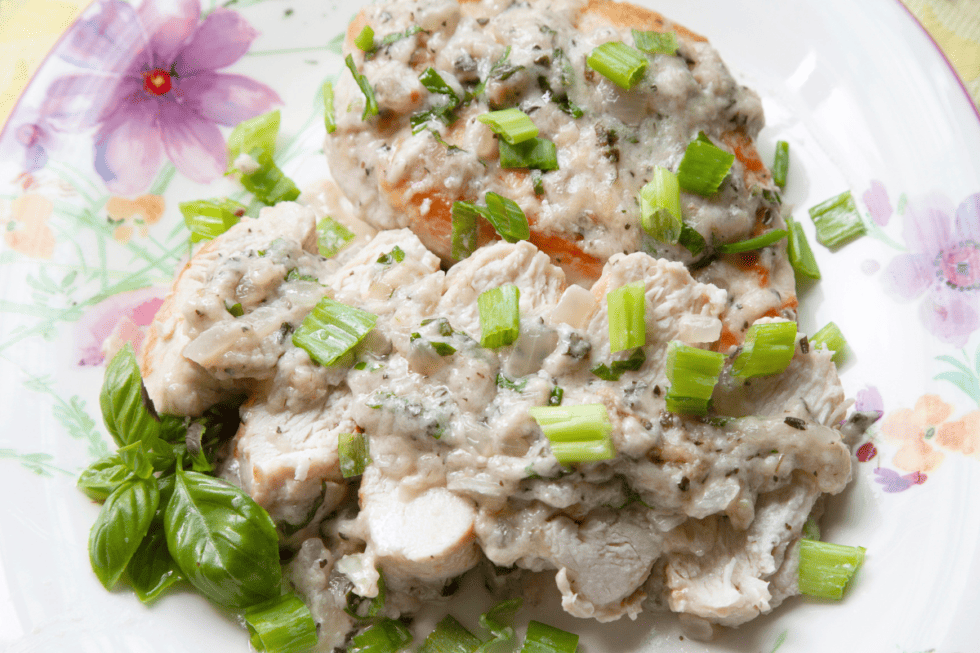
Low Histamine Sauce for Chicken with Coconut Cream and Herbs (also Low Oxalate and Low Lectin)
We were inspired by Thai cuisine to create this low histamine sauce for chicken using coconut cream and herbs.
This recipe is a delicious and versatile addition to the low histamine diet!
We’ve made our sauce to serve with chicken. It would be great for veggies or fish, too.
Coconut cream serves as the base for our sauce.
You’ll find coconut cream or coconut milk in many flavorful Thai dishes like curries, soups, and dipping sauces.
When it comes to choosing coconut cream for the low histamine diet, you’ll want to know what to look for. We’ll share that with you coming up.
In this post, you’ll also learn:
- Simple steps to make ANY low histamine sauce
- Top tips for this recipe
- Our favorite coconut cream for those with Histamine Intolerance and Mast Cell Activation Syndrome
- Is it ok to use dry herbs with Histamine Intolerance?
This recipe is:
- Low histamine
- Low oxalate
- Low lectin
- Dairy free
- Gluten free
First, let’s talk about making sauce.
When you have Histamine Intolerance, it’s important to think creatively about your cooking.
Some of your favorite recipes high in histamine may be on hold while you recover your health.
But there are many ways to adapt your favorite recipes using low histamine ingredients to lower histamine levels.
And there are many ways to build something new from scratch.
Let’s take a look.
How to Make Low Histamine Sauce for Chicken
Before you change your diet on your own, please make sure you’re working with a healthcare practitioner who can help you with this. Never limit foods unnecessarily, and always have a licensed medical provider who is supervising your case.
There are many ways to make sauces.
Sometimes, it’s as simple as using a food processor to puree veggies. Roasting them first adds even more flavor.
Then, add a little olive oil and herbs and you’re set.
That can work for tomato sauces (high histamine, though) and low histamine pesto.
Other times, sauces come together using a roux (rhymes with two) plus liquids.
A roux is what thickens the sauce. It’s usually made using a 1:1 ratio of fat to starch.
We’ll get back to that in a little bit.
But first, here’s a closer look at the types of ingredients you need to make your own low histamine sauce recipe.
Then keep reading to learn how to build a sauce with them.
These are the basic types of ingredients you need to make a sauce using a roux.
- Fat
- Starch
- Liquid
- Herbs and Spices
Fat
Typically, a roux will start with butter.
Butter is low histamine. We recommend choosing grass-fed butter. That’s butter that comes from the milk and cream of grass-fed cows.
However, if you have food sensitivities, consider doing a Dairy Zoomer to be sure you don’t have issues with casein or lactose.
Here are a few fat options that are low in histamine.
Low Histamine Fats Include:
- Avocado Oil – Cold Pressed (use cautiously if DAO levels are very low)
- Butter – from grass fed cows (low salicylate)
- Coconut Oil – extra virgin
- Extra Virgin Olive Oil (use cautiously if DAO levels are very low)
- Ghee – from grass fed cows (low salicylate)
- Meat drippings – fresh (low salicylate)
Related Article: Olive Oil – Avoiding the Frauds and Finding the Truth
In this recipe for low histamine sauce with chicken and coconut cream, we used coconut oil to enhance the coconut flavor.
Next, you’ll add starch to your fat to form the roux.
Starch
The starch component is what thickens the sauce.
Usually, this is all purpose wheat flour.
All purpose flour can be tricky if you have Mast Cell Activation Syndrome and Histamine Intolerance, or other food intolerances.
Wheat flour isn’t high histamine.
But for those who are sensitive or who have Mast Cell Activation Syndrome or Lectin Intolerance, gluten and lectins may contribute to reactions.
Everyone is different, which is why it’s so important to work with a practitioner before changing your diet too drastically.
Related Article: Are Wheat and Gluten Really Mast Cell and Histamine Triggers?
Additionally, bleached flour can use chemicals like chlorine and benzoyl peroxide to whiten the flour. Some people with MCAS are particularly sensitive to chemicals and do better with foods that aren’t processed as heavily.
Instead, consider these low histamine starches which can also be used as a thickener:
- Almond Flour – Blanched – O (very high oxalate)
- Cassava flour – (oxalate levels vary depending on amount)
- Flax meal
- Sorghum Flour
We often use cassava flour in place of all-purpose wheat flour.
At ¼ cup, cassava flour is considered high oxalate.
In our recipe, you’ll use 4 Tablespoons for the whole recipe. Once you divide that among each portion, that’s going to be lower to medium oxalate per serving.
If you are very sensitive to oxalates, even this may be too much.
Everyone is different. Our staff and clients have usually done well with Otto’s Cassava flour.
Learn more about cassava flour in the recipe for Low Histamine Cassava Tortillas (also Low Lectin, Medium Oxalate).
Liquid
The liquid is the biggest component of a sauce like this.
Choose something that matches the overall flavor of what you’re going for.
In this recipe, we’ve used coconut cream and tulsi tea.
We have broth recipes that are low histamine. (links below) You can use broth instead of tea if you have some on hand.
But we wanted to make this recipe more accessible if you didn’t have broth on hand.
Tea is a lot easier to whip up than broth! And the flavor of tulsi (also known as holy basil) goes great with this recipe.
Lower histamine liquids include:
- Low histamine meat broth
- Low histamine veggie broth
- Coconut milk
- Coconut cream
- Low histamine coffee like Purity
- Low histamine herbal teas (avoid black, green, white, and rooibos)
When choosing coconut cream for this recipe, we used the shelf-stable kind, not the kind you’d find in the refrigerator section with other creams and milks.
We like Let’s Do Organic Coconut Cream.
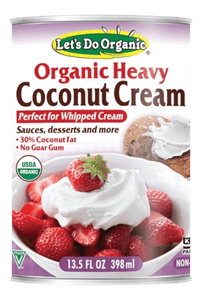
But whatever you choose, check the ingredients!
Some people with MCAS may have problems with some of the additives, preservatives, and thickeners found in some.
Make sure the only ingredients are coconut or filtered water.
And if you are choosing one from a can, note that some companies use cans that contain aluminum, BPA, or other chemicals that can leach into the coconut cream.
Let’s Do Organic states that they select cans with no detectable levels of BPA.
Now, back to the sauce…
The last step is to add your herbs, spices, and finishing touches.
Herbs and Spices
Herbs and spices enhance the flavor of your sauce, making it more satisfying.
There are many to choose from.
Just a few popular low histamine herbs and spices include:
- Basil
- Cardamom
- Cilantro
- Dill
- Garlic
- Ginger
- Lemongrass
- Oregano
- Parsley
- Rosemary
- Thyme
And as a final finishing touch, some cooks suggest adding a splash of an acidic ingredient to balance the flavor profile.
In many cases, this is citrus or vinegar.
Lemon juice may be tolerated by some, up to about ¼ teaspoon per serving.
But note that citrus can be a histamine liberator. And vinegar is considered high histamine.
We often use green apple puree in place of lemon or vinegar. It’s easiest to puree a fresh apple, but juice works, too.
For a more complete list of low histamine foods (also showing oxalates and lectins) check out the low histamine foods list.
Once you’ve made your choices for ingredients, here’s how to put them all together.
Making Low Histamine Sauce Using a Roux
Sauces are a great way to add flavor to any of your low histamine recipes.
Here’s the general step by step for making a sauce using a roux.
We mentioned earlier that a roux (rhymes with two) is used as a thickener.
- A roux is typically made using equal parts of flour and fat.
- When these two components are combined into a paste, slowly add liquid. Add about one cup at a time. A whisk is a great way to make sure the roux absorbs nicely.
- When the roux is incorporated into the liquid, reduce the heat to low and simmer until the sauce reaches the desired thickness.
- Add fresh herbs near the end of the simmer to keep the flavors bright. Simmer a few more minutes.
- Lastly, add a splash of an acidic element like lemon juice (if tolerated) or green apple juice or puree to balance the flavor profile.
That’s a general guideline for making a low histamine sauce.
But we did 2 small things a little differently in this particular recipe.
We use garlic and onions in this recipe. And one dried herb.
After some investigation, this is what we came up with. It’s a slight variation.
Steps for Making Low Histamine Sauce for Chicken with Coconut Cream and Herbs
For the most part, our recipe follows the general guide for making a sauce.
- First, you’ll melt the fat (we’ve used coconut oil) in a pan over medium heat.
- But here, instead of adding the flour, we sauteed the onions and garlic first.
- Then whisk in the flour until it forms a paste and is fully absorbed into the mixture.
- Once your “onion and garlic roux” is finished, gradually add the tea, then coconut cream and dried lemongrass, if using dried.
- Then continue to follow the steps for general sauce making as listed above.
Just a couple small modifications to get the most flavor out of your ingredients and simplify clean up and prep!
Now, speaking of dried herbs, are dried herbs ok to use if you have Histamine Intolerance?
Are Dried Herbs High Histamine or Low Histamine?
Generally, we prefer fresh herbs. But dried herbs are often still low histamine.
However, they are higher histamine than fresh.
Anything that’s aged increases in histamine levels.
Related Post: Low Histamine Foods List for Mast Cell Activation Syndrome (MCAS) and Histamine Intolerance
Some spices at the grocery store are old, even if they’re within best by or expiration date.
That doesn’t necessarily take dried spices from being low histamine to being high histamine.
It only means there’s been some increase in histamine content.
For some people in the super sensitive category, even slight increases in histamine levels are too much to handle with their degree of Histamine Intolerance.
In this case, stick with fresh.
If you aren’t super sensitive, and you’re watching your histamine intake elsewhere, you may do fine with dried herbs.
But choose dried herbs from a quality source. One of our favorite suppliers is Starwest Botanicals.
Using Dried Tulsi and Lemon Grass
We used tulsi tea to make the sauce. This was made with dried tea leaves.
And we used dried lemongrass to make up for lime zest (histamine liberator) common in recipes like this.
We wanted to experiment with some new ways of getting citrus-like flavors in recipes.
Fresh lemongrass isn’t in our local markets. So, we figured it might not be for you either.
If your store has fresh lemongrass, you can use that. Just add a little more.
You can also skip it. It will alter the flavor, but it’s still good without it.
In both cases, we used herbs from Starwest Botanicals.
They are certified organic. And they store their herbs to protect them from exposure to light and moisture. This helps preserve the freshness, aroma, and potency of their products.
Protection from moisture can help keep mold at bay, too.
We hope you come up with your own flavorful sauces. And be sure to let us know if you enjoy this one!
What to Serve with Low Histamine Sauce for Chicken with Coconut Cream and Herbs
- Sesame Cauliflower Side Dish – Low Histamine, Low Oxalate, Low Lectin
- Chinese Broccolini Recipe Inspired by Gai Lan Chinese Broccoli – Low Histamine, Low Oxalate, Low Lectin, Low FODMAP
- Creamed Kale Recipe – Low Histamine, Low Oxalate, Low Lectin
Low Histamine Sauce for Chicken with Coconut Cream and Herbs
Equipment
- Sharp Knife
- Plate
Ingredients
- 1 cup Filtered Water
- 1 Tablespoon Kauai Farmacy Tulsi Tea
- 4 Low Histamine Chicken Breasts skinless, boneless (about 1 ½ to 2 pounds total)
- 2 teaspoons Redmond Real Salt divided
- 5 Tablespoons Coconut Oil divided
- 1 Small Organic Onion diced (about 1 cup)
- 2 Fresh Garlic Cloves minced (about ½ teaspoon)
- 4 Tablespoons Otto's Cassava Flour
- 1 teaspoon Dried Lemon Grass
- 1 teaspoon Organic Fresh Ginger grated
- 1 can Let's Do Organic Coconut Cream
- 2 Tablespoons Fresh Organic Basil
- 2 Tablespoons Green Apple Puree
- 2 Tablespoons Green Onions garnish (optional)
Instructions
- Heat your water however you would when you normally make tea (microwave, electric kettle, stove top). To the hot water, add your tea leaves and let steep. You don’t need to strain it. Set aside.
- Prep your produce: dice the onion, mince the garlic, grate the ginger, finely chop the basil, chop the green onion, and make your apple puree in the blender. (It helps to have all components ready to go.)
- Measure out your cassava flour, lemon grass, and salt.
- Season the chicken breasts on both sides with the sea salt.
- Heat 1 Tablespoon of coconut oil in a large skillet over medium-high heat.
- Add the chicken breasts to the skillet in a single layer.
- Cook one side until golden brown, about 5 minutes.
- Turn the chicken breasts over and cook another 4 minutes until the other side is browned. Keep an eye on the chicken and move it around in the pan so it doesn’t stick.
- Transfer to a clean plate and set aside. (It will not be cooked through yet.)
- Lower the heat to medium. In the same pan, add the remaining 4 Tablespoons of coconut oil.
- When melted, add the onions and cook until just translucent (about 1 minute).
- Then add the garlic and cook until fragrant (about 30 seconds.)
- Add the cassava flour and whisk until incorporated.
- Add the tea (with leaves) and coconut milk, about 1 cup at a time and whisk to combine.
- Once combined, add the ginger and lemongrass.
- Reduce heat and simmer, about 1 minute or until sauce thickens.
- Add the chicken back to the pan, getting as much coverage in the sauce as possible.
- Cook until the chicken reaches an internal temperature of 165°F in the thickest parts. About 7 minutes. (Turn the chicken a few times so it doesn’t stick.)
- Add the basil and apple puree. Stir to combine.
- When the chicken is done, plate the chicken, spoon extra sauce over the chicken, and top with fresh green onions, if desired.
Nutrition
Please drop us a comment if you enjoyed this Low Histamine Sauce for Chicken with Coconut Cream and Herbs. It lets us know what recipes you enjoy so we can bring you more like them!
More Low Histamine Recipes with Chicken
- Chicken Recipe – Low Oxalate, Low Lectin, Low FODMAP, Low Salicylate
- Low FODMAP Tacos – Low Oxalate, Low Lectin, with Low Salicylate Option
- Chicken and Veggie Pad Thai – Low Lectin, Low Oxalate Option, Low FODMAP, with Low Salicylate Option
The website provides approximate nutrition information. Users should calculate the nutritional information with the actual ingredients and quantities they use in their recipes for the most accurate representation.
Some links in this website are affiliate links, which means Mast Cell 360 may make a very small commission if you purchase through the link. It never costs you any more to purchase through the links, and we try to find the best deals we can. We only recommend products that we love and use personally or use in the Mast Cell 360 practice. Any commissions help support the newsletter, website, and ongoing research so Mast Cell 360 can continue to offer you free tips, recipes, and info. Thank you for your support!
References
HappyForks. (n.d.). Recipe analyzer. https://happyforks.com/analyzer
TMS – The Mastocytosis Society. (2017, February 5). Nutrition – TMS – The Mast Cell Disease Society, Inc. TMS – the Mast Cell Disease Society, Inc. https://old.tmsforacure.org/nutrition/
Worm M. (2011). Q&A: Food additive intolerance. BMC medicine, 9, 115. https://doi.org/10.1186/1741-7015-9-115


Add A Comment